Platform Consolidation in Ag Data: What the Farmers Edge + Leaf Partnership Actually Means for Developers
The Farmers Edge and Leaf Agriculture partnership got a bit of press as a business development announcement. Two companies teaming up, logos in a press release, the usual. But if you read past the marketing layer, there's something more interesting happening.
Farmers Edge already had direct integrations with John Deere and Case. Adding Leaf brings in Climate FieldView, Trimble, Raven, Stara, and AgLeader through a single normalized layer. That's a meaningful jump in coverage. The angle worth thinking about isn't the partnership itself. It's what it signals about how ag data infrastructure is maturing, and what that means for developers building on top of it.
The Aggregator Layer Is Becoming Load-Bearing
For a while, the ag data world looked like this: every major equipment and software provider ran their own API, every one of them had slightly different auth patterns, different field models, different operation schemas. If you wanted to build something useful for a farm running mixed equipment (which is most farms), you were writing bespoke integrations for each provider.
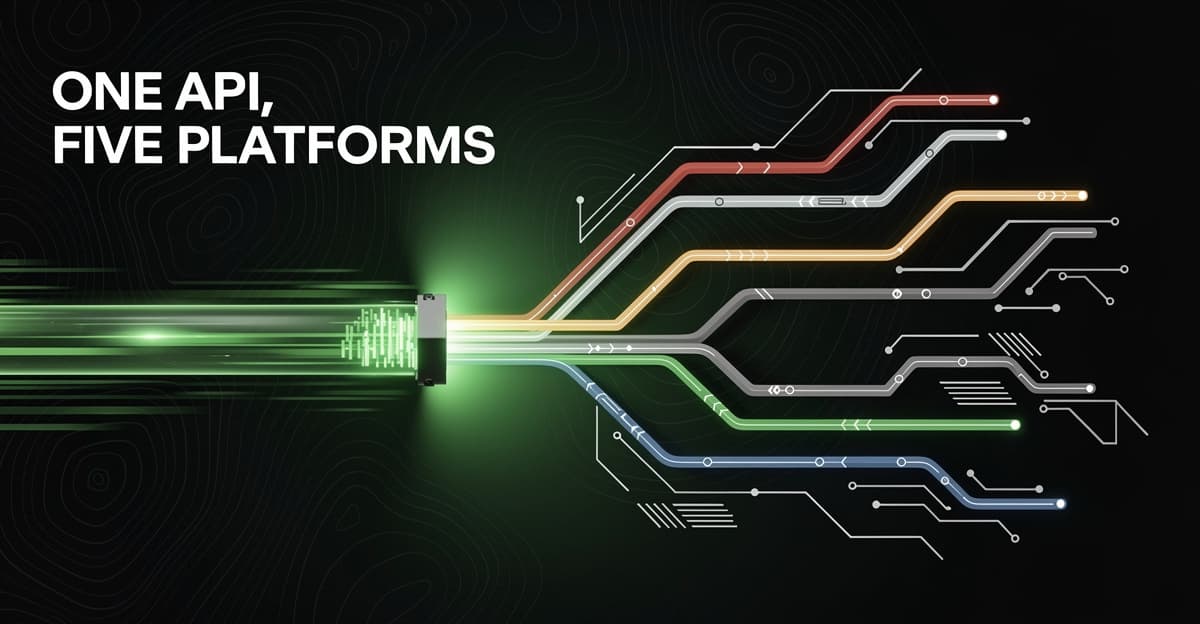
Leaf's bet was that someone should normalize all of that. One API surface, consistent field and operation objects, unified auth. The Farmers Edge deal is evidence that this layer is becoming infrastructure that serious ag platforms now build on top of, rather than around.
This matters for developers because when a platform like Farmers Edge routes provider data through a normalized API instead of maintaining individual integrations, the blast radius of a single provider schema change shrinks dramatically. You stop chasing each equipment OEM's API changelog and start relying on the normalization layer to absorb it.
That said, normalization always has a cost. When you flatten provider-specific data into a common schema, you lose some fidelity at the edges. Variable rate prescription details, for example, often have provider-specific fields that don't map cleanly across platforms. Worth understanding what you're trading away before assuming the unified layer covers everything you need.
What Multi-Provider Data Actually Looks Like in Practice
Take a farm that runs John Deere equipment but uses Climate FieldView for field records and Trimble for application data. From a data standpoint, this is a genuinely common situation. The same physical field has records scattered across three systems, often with slightly different boundaries, different field names, and different operation schemas.
When you're building tools that need to reason about that field, the first problem is identity. Which records actually belong to the same acre? The second problem is schema. Harvest data from Deere and harvest data from Trimble don't look the same coming out of their respective APIs.
Here's what a multi-step query looks like when you're pulling field and operation data through FieldMCP:
// Step 1: Discover orgs
{
  "resourceType": "organizations"
}

// Step 2: List fields for your org
{
  "resourceType": "fields",
  "orgId": "your-org-id"
}

// Step 3: Pull field details, boundary, and recent operations
{
  "orgId": "your-org-id",
  "fieldId": "your-field-id",
  "include": ["details", "boundary", "operations"],
  "operationsDateRange": {
    "startDate": "2024-09-01",
    "endDate": "2025-01-01"
  }
}

// Step 4: Search specifically for harvest operations if you want more
{
  "orgId": "your-org-id",
  "fieldId": "your-field-id",
  "operationType": "harvest",
  "dateRange": {
    "startDate": "2024-09-01",
    "endDate": "2025-01-01"
  }
}
The canonicalFieldId you get back from deere_get_field_overview is your stable cross-provider reference. That's the thing worth storing. Provider-specific IDs shift; the canonical ID is meant to be durable across syncs. See the get-field-overview docs for details on how that works.
The Variable Rate Angle Nobody Talks About
Deals like the Farmers Edge/Leaf partnership get framed around "data access." More fields, more operations, more coverage. That framing is correct but incomplete.
The more interesting downstream effect is what unified operation data enables for variable rate decision-making. Variable rate technology (VRT) for inputs like seed and fertilizer depends on having consistent historical data across the field: yield history, soil test results, application records. When those records live in three different systems with three different schemas, building a coherent picture of field variability is a data wrangling problem before it's an agronomy problem.
When that data is normalized, you can actually run analysis. Feed yield history, soil tests, and rotation data into a diagnostic tool and get back something actionable. The University of Florida Extension's VRT overview has a solid breakdown of the data inputs that drive good variable rate prescriptions. The short version: you need consistent spatial data over multiple years. That's exactly what multi-provider normalization makes easier to assemble.
With FieldMCP's intel_diagnose_field, you can pipe normalized field data directly into agronomic analysis:
{
  "fieldId": "canonical-field-uuid",
  "fieldName": "North Field",
  "acres": 180,
  "crop": "corn",
  "targetCropYear": 2025,
  "location": {
    "state": "IL",
    "region": "central"
  },
  "yieldHistory": [
    { "year": 2022, "bushelsPerAcre": 198, "crop": "corn" },
    { "year": 2023, "bushelsPerAcre": 172, "crop": "soybean" },
    { "year": 2024, "bushelsPerAcre": 205, "crop": "corn" }
  ],
  "rotationHistory": {
    "fieldId": "canonical-field-uuid",
    "history": [
      { "year": 2022, "crop": "corn", "tillage": "no_till" },
      { "year": 2023, "crop": "soybean", "tillage": "no_till" },
      { "year": 2024, "crop": "corn", "tillage": "minimum" }
    ]
  }
}
That only works if you actually have the yield history across years. Which requires consistent data collection across providers. Which is exactly the problem the Farmers Edge/Leaf integration is trying to solve.
See the diagnose-field tool docs for the full input schema and what you get back.
The Security Question Nobody Wants to Ask
Consolidating farm data through fewer API layers has real benefits. It also concentrates risk. When researchers have found vulnerabilities in individual ag platform APIs (and they have), a normalization layer sitting on top of multiple providers represents a broader attack surface.
This isn't an argument against aggregation. It's an argument for treating auth seriously at every layer. If you're building tools on top of any ag data API, understand how tokens are scoped, how refresh flows work, and what a compromised credential can actually access. Our OAuth authentication docs cover how FieldMCP handles this. Read the equivalent docs for every provider you touch.
Farmers Edge routing data through Leaf doesn't inherently make this better or worse. But if you're building on top of that stack, you need to know where the auth boundaries actually sit.
What to Do With This
The Farmers Edge/Leaf deal is useful as a signal: the ag data industry is consolidating around normalization layers, and that's making it more practical to build tools that work across the full diversity of equipment and software on real farms.
If you're building ag software and you're still managing individual provider integrations by hand, now is a good time to reconsider that architecture. If you're already on a normalized layer, start thinking harder about what multi-year, multi-provider data unlocks for analysis, not just what it unlocks for display.
Start with the FieldMCP quickstart to see how multi-provider field data comes together in practice. If you already have John Deere connected, try running deere_search_operations across a full growing season and see what you can actually build when the data retrieval problem is solved.